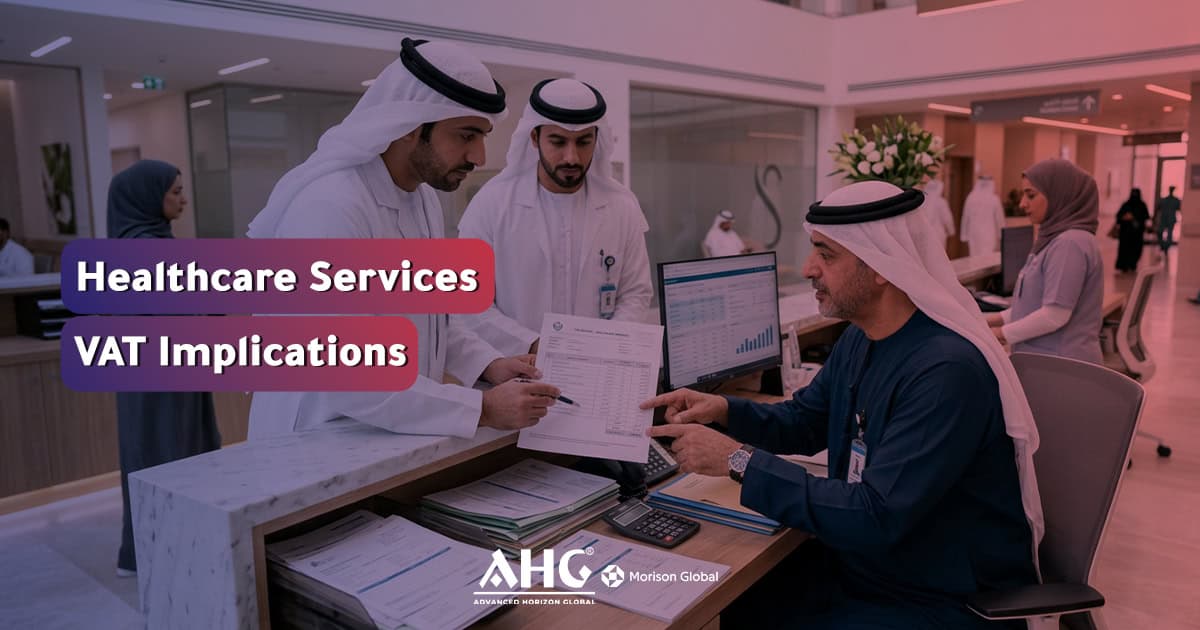
Implications of VAT on Healthcare Services
Many businesses in the healthcare sector, including hospitals, clinics, and health tech companies in the United Arab Emirates, often wonder how VAT applies to their services. Since healthcare is a basic necessity, it may seem confusing at first why it is subject to taxation at all.

VAT was introduced in the UAE in 2018 to support a more stable and diversified economy beyond oil revenues. However, healthcare is not treated like regular goods or services. Instead, the system is designed with flexibility. Some healthcare services are charged at the standard VAT rate, others are exempt, and many essential services are taxed at 0%. Understanding these categories is important, as the Implications of VAT on Healthcare Services can impact pricing, compliance, and financial decisions within the healthcare industry.
also read: UAE VAT Update 2026 – New VAT Rules
Why Did the UAE Structure VAT This Way?
The United Arab Emirates has more than 4,000 healthcare facilities, and the sector is expected to grow beyond USD 43 billion by 2030. With more hospitals and private clinics opening up, there was a clear need for a fair and balanced tax system. This is where VAT comes into play, helping the government manage revenue while still supporting an essential sector like healthcare.

At the same time, healthcare cannot be treated like any other business activity. People depend on it every day, so the system had to be designed with care. As a result, VAT on Healthcare Services is split into three main categories within the VAT framework. This structure allows the government to maintain balance while also addressing the Implications of VAT on Healthcare Services, ensuring that essential treatments remain accessible while businesses stay compliant with tax rules.
Zero-Rated Healthcare Services
In the United Arab Emirates, most essential medical services fall under the zero-rated VAT category. This means procedures such as surgeries, diagnostic tests, routine checkups, dental care, and preventive treatments are charged at 0% VAT. Even though patients are not charged VAT, healthcare providers can still recover the VAT paid on their business expenses, which helps improve financial performance. From an accounting perspective, the Implications of VAT on Healthcare Services in this category are quite favorable, as businesses can manage costs efficiently while continuing to offer essential treatments. Examples include treatments approved by health authorities, certain prescribed medicines, and medical equipment used directly in patient care.
Exempt Healthcare Services
Some healthcare services are classified as exempt from VAT. While no VAT is charged to patients, providers are not allowed to recover the VAT they pay on their costs. This key difference from zero-rated services can increase operating expenses and affect profitability. Services that usually fall under this category include primary healthcare, preventive services, and inpatient treatments. In this case, the Implications of VAT on Healthcare Services become more noticeable, as providers need to carefully plan their expenses and pricing to manage the additional cost burden.
Standard-Rated Healthcare Services (5%)
Not all services offered by healthcare providers are considered essential medical care. Services that are elective or cosmetic in nature are subject to the standard VAT rate of 5%. This includes procedures like Botox, laser hair removal, cosmetic surgeries, wellness treatments, and premium hospital services beyond standard care. For facilities offering both medical and non-medical services, proper accounting is necessary to separate taxable and non-taxable income streams, ensuring accurate reporting and compliance with VAT regulations. Here, the Implications of VAT on Healthcare Services are tied closely to revenue management and tax reporting, as providers must clearly distinguish between different types of services to avoid errors and penalties.
Why VAT Compliance Matters in Healthcar
VAT compliance plays a key role in how healthcare businesses operate in the United Arab Emirates, as it directly affects daily decisions and long-term planning. When it comes to procurement, VAT applies to items like medical equipment, hospital beds, surgical tools, and diagnostic machines. This means healthcare providers need to strike a balance between managing VAT costs and maintaining high standards of patient care. Financial planning is also closely tied to VAT, since it can influence pricing strategies and cash flow. To keep things running smoothly, providers must issue proper VAT-compliant invoices and submit returns on time, ensuring they can recover input tax without complications.

There are also risks involved if VAT rules are not followed correctly. Healthcare providers handle a large number of transactions every month, and even small errors in applying VAT can lead to penalties or extra charges. That’s why maintaining clear records, aligning contracts with VAT rules, and following a structured process is essential. In addition, correct classification of services, medicines, and equipment is crucial because not everything is taxed the same way, making mistakes more likely if proper care is not taken.
Keeping up with the latest VAT updates is equally important, as regulations can change over time. Regularly checking updates from authorities like the Federal Tax Authority helps ensure compliance. All of these factors highlight the Implications of VAT on Healthcare Services, as they influence cost control, operational efficiency, and overall financial stability.
The Future of VAT in Healthcare
The United Arab Emirates continues to align its tax system with global standards, and upcoming changes expected around 2026 are more focused on improving transparency and digital systems rather than increasing tax rates. The shift is mainly toward better reporting, stronger compliance, and the use of technology to track transactions more efficiently.
For healthcare providers, this means it is important to keep records well-organized and stay updated with any changes in tax rules. Regular monitoring of updates from authorities like the Federal Tax Authority can help avoid surprises and ensure smooth compliance. Staying prepared and proactive will make it easier to manage the Implications of VAT on Healthcare Services, especially as regulations continue to evolve.
AHG Supporting Your VAT Compliance Needs
In today’s business environment, following VAT rules is not optional but a basic requirement for every registered company, especially in the healthcare sector in the United Arab Emirates. Healthcare operations can be quite complex, and many providers often face challenges when it comes to applying VAT correctly and recording it properly in their accounts. This is where working with experienced professionals like AHG can make things much easier. Their expertise helps businesses clearly understand how VAT applies to different services and ensures everything is handled in line with regulations.
AHG’s tax team supports healthcare providers with proper structuring of services, accurate VAT charging, timely filing of returns, and maintaining complete documentation. Having the right guidance in place not only reduces the risk of errors but also improves overall efficiency in managing tax responsibilities. This becomes even more important when considering the Implications of VAT on Healthcare Services, as proper compliance directly affects financial stability and smooth business operations.
Conclusion
In summary, VAT in the United Arab Emirates healthcare sector is designed to strike a careful balance between supporting essential medical services and maintaining a structured tax system. With different VAT treatments such as zero-rated, exempt, and standard-rated services, healthcare providers must stay alert and manage their accounting processes with accuracy.
From procurement and pricing to compliance and reporting, every aspect of operations is influenced by VAT rules. Understanding these details and staying updated with regulatory changes is key to avoiding risks and ensuring smooth operations. In the end, being proactive and well-informed helps businesses handle the Implications of VAT on Healthcare Services more effectively while continuing to deliver quality care.
Managing finances as an influencer in the UAE can get complicated, but AHG makes it easier. With our experience in influencer accounting, we handle everything from tax compliance to financial planning, so If you need any tax services or tax consultancy, you won’t find better than AHG Legal Accounts. Each of our teams has extensive experience in this field and will provide you with the best services in a professional manner. Please feel free to contact us today, we are always waiting for your request to be fulfilled!
Click Here