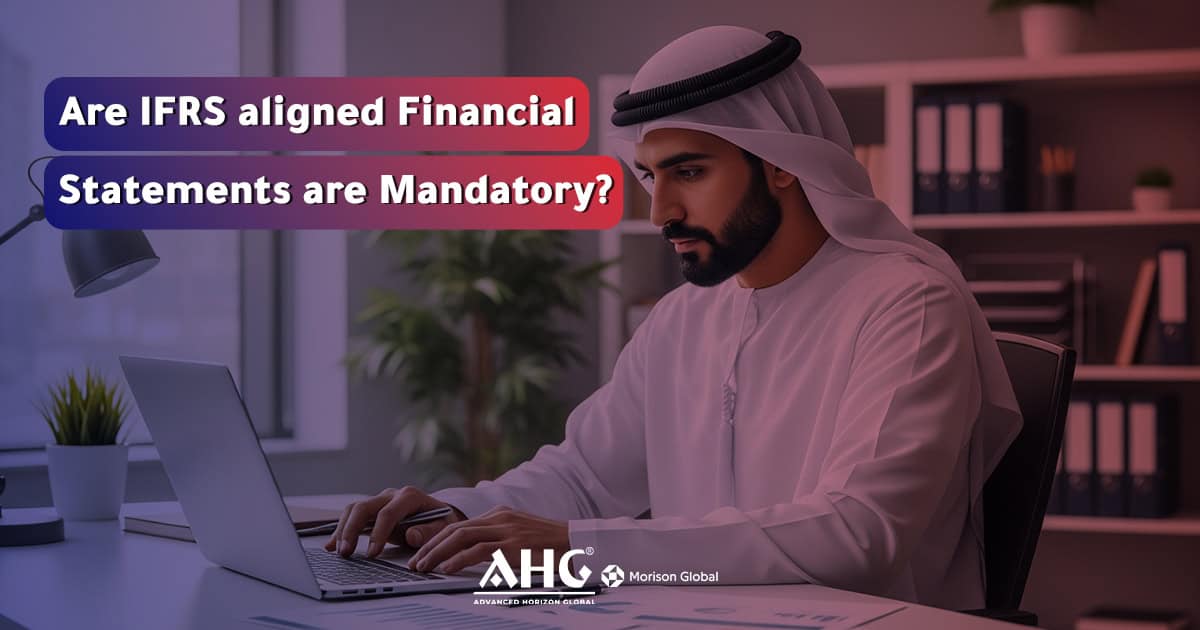
Why IFRS aligned Financial Statements are Mandatory
I often hear business owners say, “Why should we update our financial statements now when everything was working fine before?” It’s a fair question. When you’re managing a fast-moving business in the UAE, dealing with new accounting requirements can feel like an extra burden. Most companies prefer to focus on operations, sales, and growth rather than adapting to new reporting standards.

However, from practical experience in the field, the shift toward IFRS is not just a regulatory formality anymore. It has become essential for building accurate, transparent, and consistent financial reports. In fact, Why IFRS aligned Financial Statements are Mandatory is no longer just a theoretical discussion—it’s something businesses are experiencing in real terms. Companies that adopt IFRS find it much easier to handle audits, respond to tax authority reviews, and present clear financial data to stakeholders. Over time, this shift doesn’t complicate things—it actually makes financial management more structured and reliable.
Also Read: Implications of ECL Calculation Under IFRS 9
Why tax authorities require IFRS reporting standards
Tax authorities need everyone to speak the same financial language. Without a unified standard, each business could present its numbers in a different way, making it difficult to compare results or verify tax calculations. In a market like the UAE, where companies operate across different emirates and even internationally, consistency becomes critical. IFRS provides that common ground, ensuring that financial figures are prepared using the same rules everywhere.

This is exactly why IFRS aligned financial statements are mandatory for many businesses today. They make sure that a reported profit in Abu Dhabi carries the same meaning as it would in Dubai or even London. More importantly, they reduce the chances of manipulating numbers by hiding costs or overstating revenue. For corporate tax purposes in the UAE, IFRS does more than just meet compliance requirements—it creates clarity, builds trust with the authorities, and makes the entire review and audit process smoother and more efficient.
Why IFRS helps businesses stay ready for the future
- Future readiness: As your business grows, having clean and standardized financial records from the beginning saves a lot of time, effort, and cost later on. You avoid going back to fix old numbers or rebuild reports from scratch.
- Investor confidence: IFRS-based financial statements make your business look more reliable and professional on a global level. Investors, banks, and international partners are already familiar with IFRS, so it becomes easier for them to understand and trust your numbers.
- Better internal clarity: IFRS pushes you to take a closer and more disciplined look at your assets, liabilities, and income. This helps you clearly see where your business stands financially, and that kind of visibility supports better decision-making.
This is exactly why IFRS aligned Financial Statements are Mandatory for many businesses today. By following IFRS, the UAE is sending a strong message that its economy is structured, transparent, and ready to deal confidently with global markets.
Your practical steps to align with IFRS
- Start the discussion: Sit down with your accountant or auditor and ask a clear question about whether your financial statements fully follow IFRS. This simple step can highlight gaps early.
- Know your options: Some businesses can apply simplified rules under IFRS for SMEs. It’s important to check if your company falls into this category before moving forward.
- Be aware of thresholds: If your revenue is below AED 3 million, you may use cash basis accounting. For most other businesses, accrual accounting under IFRS is the standard approach.
- Take action early: If you are still using a different accounting method, don’t delay the transition. Adjusting your opening balances for corporate tax takes time, so it’s better to start sooner rather than later.
This is where understanding Why IFRS aligned Financial Statements are Mandatory becomes practical, not theoretical. If you’re unsure how this applies to your business, begin with a gap analysis. Compare your current reports with IFRS requirements, identify the areas that need adjustment, and focus on what could impact your tax position and disclosures the most. From there, build a clear transition plan with timelines and align it with your audit process to ensure a smooth shift.
Final advice on aligning with IFRS in the UAE
From what I’ve seen in practice, ignoring IFRS requirements can lead to real problems, not just on paper. Businesses may face financial penalties, risk issues with their trade license, and even lose credibility in the market. In simple terms, IFRS-aligned financial statements are not just a requirement, they act like a roadmap that helps your business move smoothly through compliance while building trust with banks, investors, and partners. This is exactly where the idea of Why IFRS aligned Financial Statements are Mandatory becomes clear in real life, not just theory.

For businesses operating in the UAE, aligning with IFRS for corporate tax is not about blindly following a global rulebook. It’s about speaking a clear and consistent financial language that the authorities, especially the FTA, can easily understand and rely on. A practical way to approach this is to create a step-by-step IFRS checklist that fits your business size and industry. This makes the process more manageable and helps you stay organized while moving toward full compliance in a structured and realistic way.
How AHG can support your IFRS journey
At AHG, we work closely with businesses and startups to make IFRS adoption simple and practical, not overwhelming. Our team of experienced accountants and auditors understands the IFRS framework in depth, so we guide you step by step through the entire process, from assessing your current financials to implementing the required changes. We focus on making the transition smooth, avoiding disruptions to your daily operations while ensuring your reports are fully aligned with international standards.
We also provide tailored support based on your business size and industry, so you’re not getting a one-size-fits-all solution. Beyond implementation, our team trains your in-house accountants and finance staff, helping them understand how to apply IFRS correctly in their day-to-day work. This hands-on approach ensures long-term compliance and builds internal confidence, so your business stays on track without constantly relying on external support.
conclusion
In conclusion, moving toward IFRS is no longer optional for businesses that want to operate confidently in the UAE’s evolving regulatory environment. It goes beyond compliance and becomes a foundation for clear reporting, smoother audits, and stronger relationships with investors and authorities. When your financials are structured, transparent, and aligned with global standards, you reduce risk and gain better control over your business decisions. Taking the right steps early, with the right guidance, will not only keep you compliant but also position your business for sustainable growth and long-term success.
Managing finances as an influencer in the UAE can get complicated, but AHG makes it easier. With our experience in influencer accounting, we handle everything from tax compliance to financial planning, so If you need any tax services or tax consultancy, you won’t find better than AHG Legal Accounts. Each of our teams has extensive experience in this field and will provide you with the best services in a professional manner. Please feel free to contact us today, we are always waiting for your request to be fulfilled!
Click Here